
Brand Strategy Begins With Identity: Resonance-First Client Profiling
Why Identity Creates Attraction Before Strategy Ever Works
For a long time, I followed the same advice most founders are given when they want to grow their business.
Define your ideal client.
Clarify their demographics.
Map their pain points.
Speak directly to their needs.
On paper, it made sense. It was logical, structured, and widely accepted. And for a while, it worked just enough to feel convincing.
But something didn’t add up.
Even with a well-defined ideal client profile, the people who actually reached out often didn’t match it. Some were far more aligned than expected. Others looked perfect on paper but felt wrong in practice. There was a recurring gap between who the strategy was designed for and who was actually responding.
Over time, that gap became impossible to ignore.
The limits of the traditional Ideal Client Profile
The traditional ICP approach assumes that attraction works from the outside in.
You define who you want to reach, shape your messaging accordingly, and expect resonance to follow.
And sometimes it does. Especially in early business stages, this structure can be helpful. It gives direction. It reduces overwhelm. It offers something solid to work with.
But as founders evolve, the cracks start to show.
I noticed this pattern not just in my own work, but repeatedly in clients who were deeply self-aware, values-led, and no longer operating from survival or imitation. Their businesses had changed. Their internal state had changed. But their client profiling hadn’t caught up.
They were still trying to decide who to attract, rather than noticing who was already responding to them and why.
That’s where the mismatch begins.
What became clear over time
Attraction doesn’t start with the client.
It starts with the founder’s internal architecture.
Not consciously, and not deliberately, but consistently.
The emotional patterns you operate from, the level of self-trust you hold, the degree to which your expression is filtered or restrained. All of this shapes the signal you put into the world, whether you intend it or not.
Clients don’t respond to your ICP document.
They respond to your internal state made visible.
This is where most client profiling fails. It treats resonance as something you engineer externally, instead of something that emerges relationally.
Identity creates attraction
The moment I stopped trying to refine ideal client profiles and started observing patterns of attraction instead, a different picture emerged.
Certain people were consistently drawn in. Not because of the services themselves, but because of how I spoke, what I named, and the emotional tone underneath the words. Others quietly disappeared as my work became more precise and less performative.
This wasn’t a marketing adjustment.
It was an identity shift.
As my own internal alignment deepened, the quality of resonance changed with it. The business didn’t need louder messaging. It needed clearer signal integrity.
That’s when Resonance-First Client Profiling took shape.
What Resonance-First Client Profiling actually looks at
Instead of starting with demographics or personas, this approach begins underneath the surface.
It looks at:
- your internal state and emotional patterns
- how safe your voice feels to use
- where your expression is distorted by adaptation or conditioning
- the relational field you create through your presence, not just your words
From there, client patterns become visible.
Not hypothetical clients.
Actual people who feel drawn, stay engaged, and respond without persuasion.
Only after these patterns are understood does strategy come in. Messaging, positioning, and structure are layered on top of what’s already working, rather than trying to compensate for misalignment underneath.
Why this matters in identity-led branding
Identity-led branding doesn’t start with values or storytelling. Those are surface expressions.
It starts with coherence between who you are internally and how you show up publicly.
When that coherence is missing, no amount of ideal client refinement fixes it. The brand may look polished, but it feels strained. Clients sense the dissonance, even if they can’t articulate it.
When identity stabilises, attraction becomes simpler.
Not easier, but cleaner.
You stop chasing alignment and start recognising it.
Reframing the role of the Ideal Client Profile
This doesn’t mean ICPs are useless. They have their place.
But in identity-led strategy, they come later, not first.
They are descriptive, not prescriptive.
They reflect lived resonance rather than imagined preference.
Used this way, client profiles stop being a tool for control and become a mirror for understanding what’s already happening beneath the surface.
The organising principle underneath it all
Strategy works best when it follows identity, not when it tries to lead it.
Resonance can’t be manufactured.
It can only be clarified.
When founders stop asking “Who should I attract?” and start asking “What signal am I actually sending?”, the entire conversation changes.
That shift is subtle.
But once seen, it’s hard to unsee.
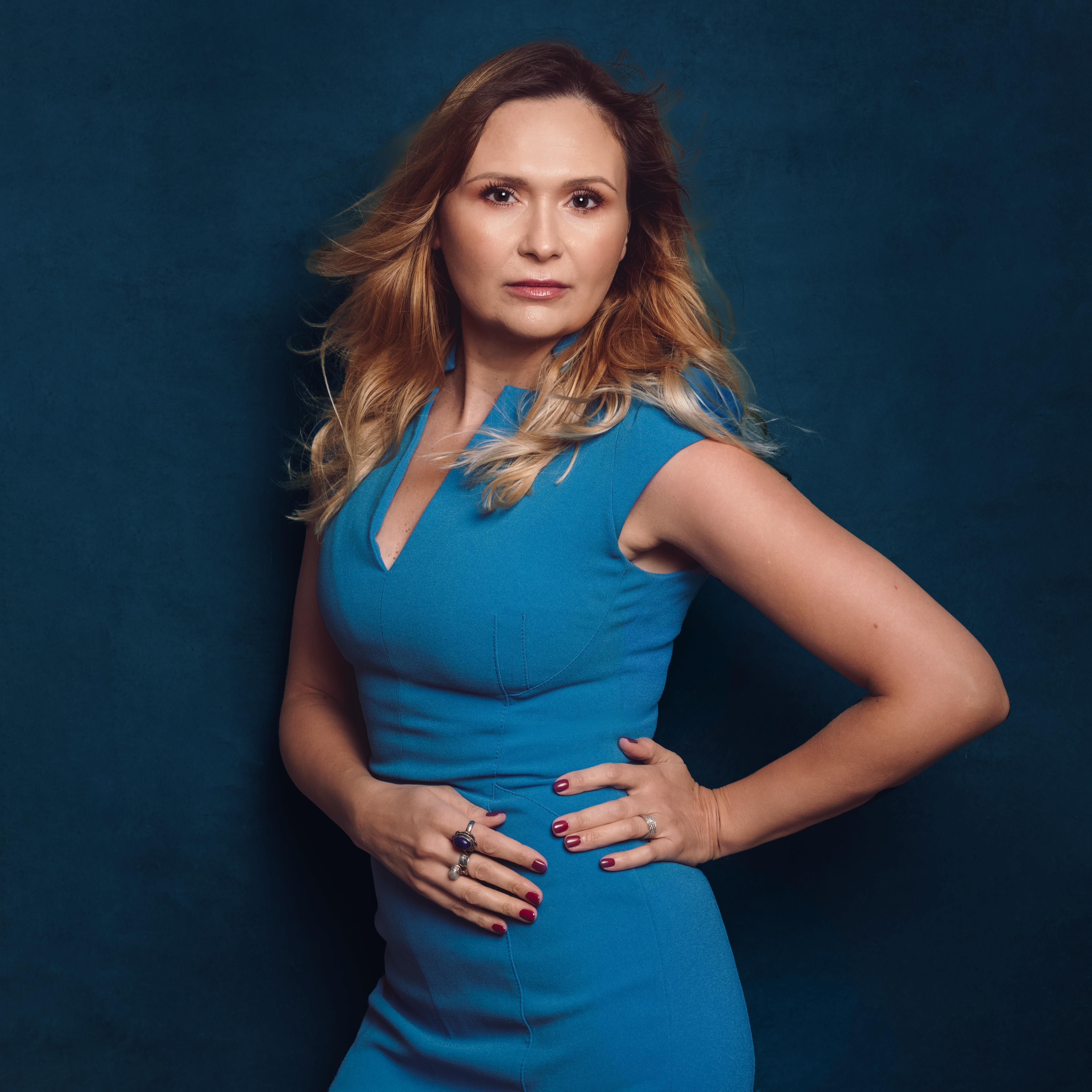
I work with branding at the level where identity comes before strategy.My approach emerged through years of noticing where traditional branding works on paper but breaks down in practice, especially during periods of personal evolution.
I integrate symbolic identity systems, AI-assisted pattern analysis, and deep emotional insight to map the underlying architecture that shapes how people lead, communicate, and are perceived. Not to create a persona, but to reveal what is already operating beneath conditioning, adaptation, and survival strategies.
This is identity-led branding as a form of personal transformation expressed outwardly. The work focuses on coherence, not performance, and on restoring alignment between internal state and external expression.
For some, that expression takes shape through language, strategy, and visibility. For others, it extends into visual embodiment, where photography reflects identity shifts and leadership presence at the moment someone is ready to be seen.